
Ink-Thin Layers: How I Paint
A single 10x20 painting of mine can take hundreds of hours. People are often surprised by that number, and I understand why. But once you see how I work, it starts to make sense.
Paint as Ink
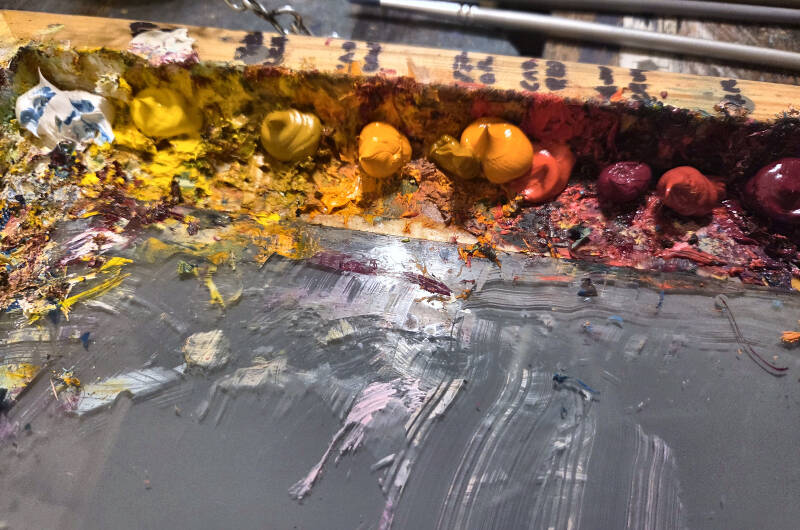
My process begins with a simple choice: I thin my oil paints until they behave almost like ink. My mix is roughly ninety percent odorless thinner and ten percent Liquin. The thinner does most of the work, loosening the paint until it glides across the surface and follows the path of the brush exactly. The touch of Liquin gives it just enough body to stay controlled and smooth.
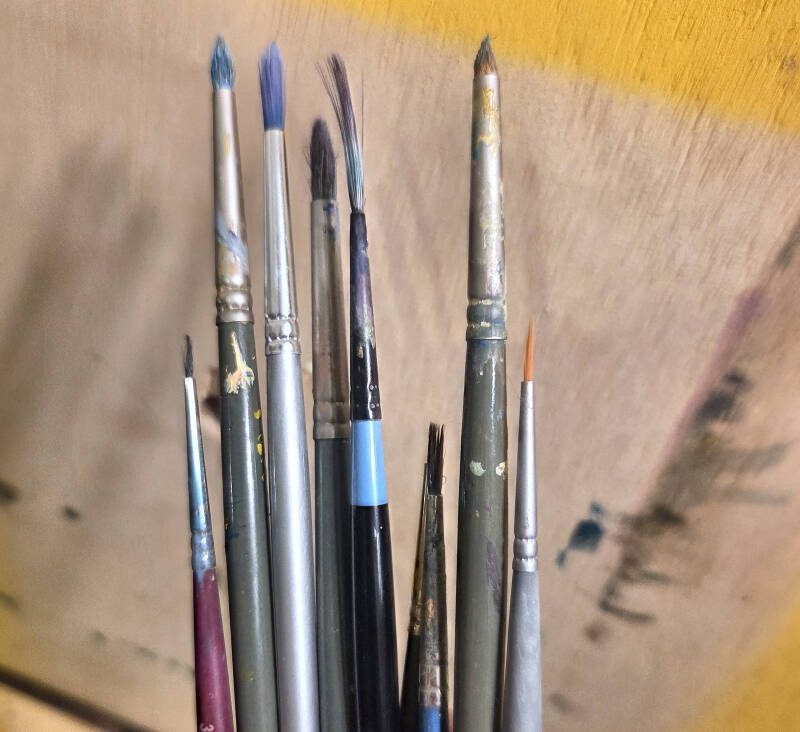
That ink-like consistency is what makes fine detail possible. With thicker paint, a very small brush drags and clumps. With thinned paint, a single hair-thin line can be placed exactly where I want it, with no more pressure than a whisper.
Many Layers, Great Patience
Because the paint is so fluid, I build each painting slowly, in many thin layers rather than a few bold strokes. Each layer is a small, deliberate step. Colors deepen gradually, transitions soften, and detail accumulates in a way that can’t be rushed.
I work almost entirely with very fine detail brushes, which means every inch of the canvas asks for attention. This is where the hours go. Some pieces have dozens of layers, each needing days or even weeks to dry before I can continue. The waiting is part of the work. It teaches me patience, and it lets each layer settle into the next.
Why Art Nouveau
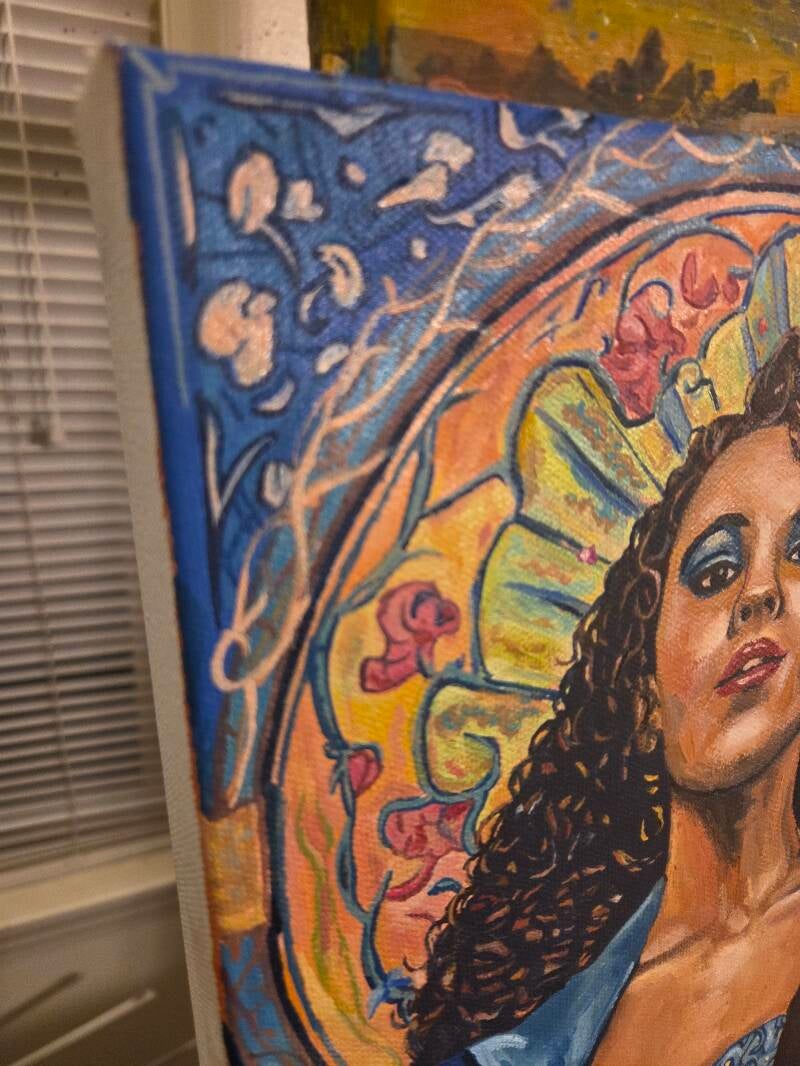
My style grows out of art nouveau, and my greatest influence is Alphonse Mucha. What I love most about his work is the tension at its center: heavy, confident linework paired with soft, flowing, organic forms. Natural shapes held in place by crisp, unmistakable lines.
It’s a style that captures the beauty of its subject while remaining bold and graphic, and that balance is exactly what I chase in every piece. The patient, controlled way I paint is what allows me to pursue it in oil, where each line can be as precise as the flowing forms around it are free.
My introduction to Mucha came as a teenager, by chance. I found a calendar of his work, and each month revealed a new image: graceful figures framed in ornate halos, hair curling into elaborate arabesques, every curve outlined with that unmistakable confident line. I had never seen anything like it. I remember studying each page long after the month had passed.
That calendar sent me searching. I read everything I could find about him, studied how he built his compositions, and copied his work again and again, trying to understand how something so graphic could still feel so alive. Mimicry was my first teacher. Over the years it slowly turned into a style of my own, but the pull of that first calendar has never left me.
The Slow Way
In a world that moves quickly, I find something meaningful in working this slowly. Hundreds of hours, thousands of tiny strokes, and a painting that reveals more the closer you look.
Every painting is a conversation between patience and detail, and I’m in no hurry for it to end.